


Yes, a 36W solar panel can charge a compatible power bank—but the answer depends on more than the number printed on the panel. The power bank must accept the panel's output method, the cable must support the connection, and sunlight must be strong and consistent enough for charging to remain stable.
This guide answers can a 36W solar panel charge a power bank with a compatibility-first process. It also shows how to estimate energy without presenting changing outdoor conditions as guaranteed performance.

Quick answer: when will a 36W solar panel charge a power bank?
The setup can work when all of these conditions are true:
- The solar panel provides an output connection and charging protocol the power bank accepts.
- The power bank's input range includes the voltage and current offered by the panel.
- The cable and any permitted adapter are correctly rated and undamaged.
- The panel receives enough direct, even sunlight to maintain the connection.
- The power bank remains within its allowed operating temperature.
A 36W rating is a maximum design figure under defined conditions. It does not mean the power bank will receive 36W throughout the day.
Start with the power bank's input label
Before connecting anything, find the power bank's input specifications in its manual, on the case, or on the official product page. Look for the accepted connector, voltage, current, and USB charging protocol. Do not rely only on the connector shape: two USB-C ports can support different roles or power profiles.
For example, a USB-C port may be output-only, input-only, or bidirectional. The fact that a cable physically fits does not prove that charging negotiation will succeed.
If the panel's documented output and the battery's documented input do not overlap, do not experiment with improvised adapters. Use only configurations approved by both manufacturers.
What the 36W rating actually means
Watts describe the rate of power transfer at a moment. Watt-hours describe accumulated energy. A 36W panel operating at its rated output for one hour would theoretically produce 36Wh, but outdoor systems rarely stay at one power level for an entire hour.
Real output changes with:
- Sun angle and time of day
- Cloud cover and haze
- Partial shade from trees, tents, cables, or gear
- Panel temperature and surface cleanliness
- Conversion and cable losses
- The power bank's current state of charge and input control
The U.S. Department of Energy explains that actual photovoltaic energy yield accounts for operating factors such as heat, dirt, and shade. That is why a charging-time estimate should use an observed average input, not the panel's rated wattage alone.
A transparent way to estimate solar charging time
If the power bank displays input watts, observe the reading for a stable period in direct sunlight. Use a conservative average rather than the highest brief value.
The basic planning formula is:
Estimated hours = energy needed in Wh ÷ average charging input in W
Suppose a battery needs 54Wh and the observed average input is 18W:
54Wh ÷ 18W = 3 hours
This example is arithmetic, not a RINECOPO test result. A real session can take longer because the battery may reduce input near full, clouds may interrupt charging, and energy is lost during conversion.
If you know only milliamp-hours, do not compare that number directly with panel watts. Convert the battery's labeled energy to watt-hours using the manufacturer's stated nominal voltage, or use the watt-hour figure printed on the battery.
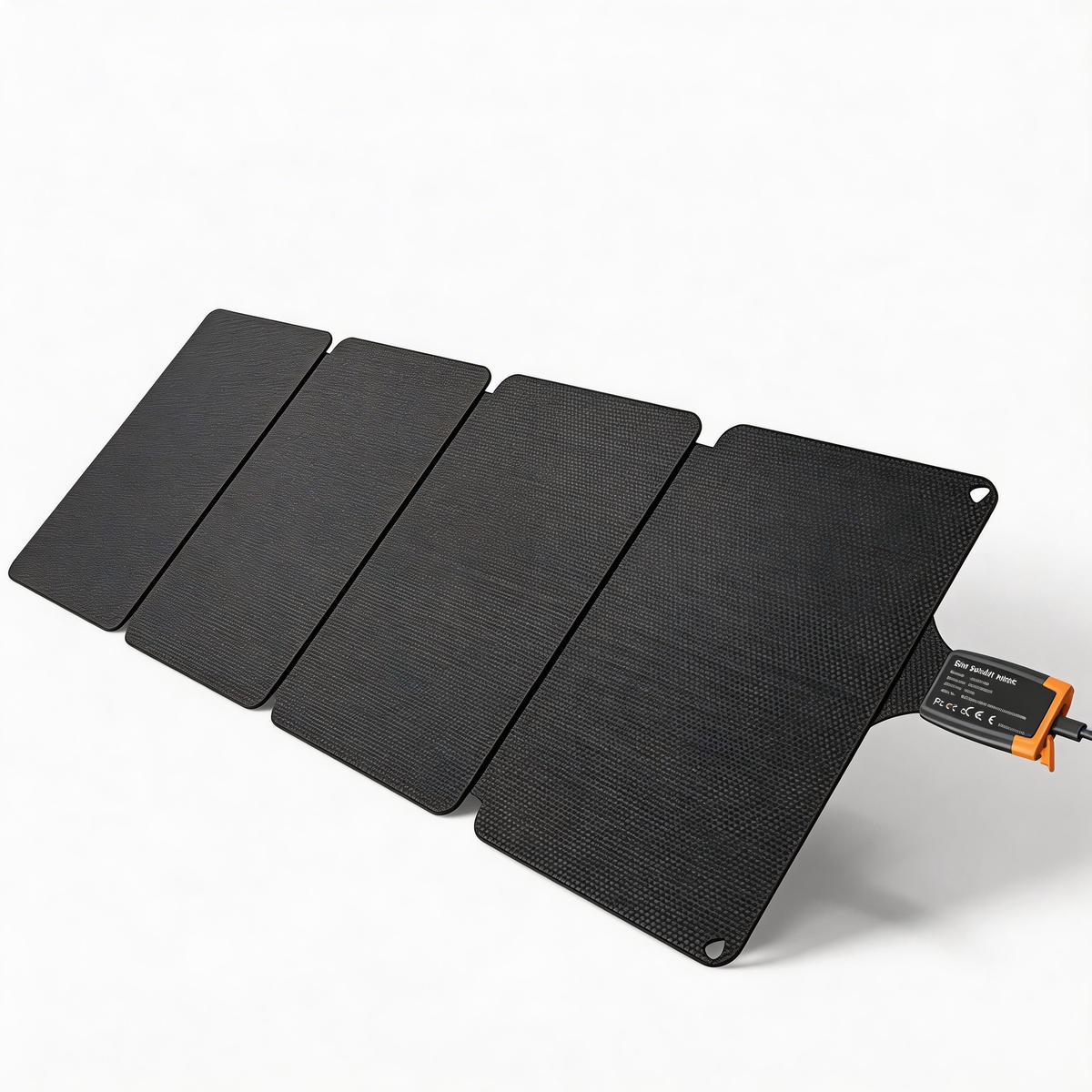
iFORWAY 36W Backpacking Solar Charger
At only 2.35 lb, this foldable USB-C solar charger is built to keep phones, power banks and everyday essentials powered when you're away from an outlet.
Why charging a power bank is often easier than charging every device directly
A power bank stores energy for later use. That can separate solar collection from device use: the panel works during the best sunlight, while phones or other electronics can charge later in a tent, vehicle, or evening workspace.
It also gives you one place to observe input and remaining energy. However, it adds another conversion step, so some energy is lost. Directly charging a phone may be reasonable in stable sun, but phones can repeatedly start and stop charging when clouds pass. A compatible power bank may handle variable input differently, but its behavior still needs to be tested.
Check the connector path from panel to battery

The RINECOPO 36W panel product page lists USB-C output with multiple fast-charging protocols. The page also lists 36W output power and solar conversion efficiency up to 23%. Those specifications help narrow compatibility, but the receiving battery's input requirements remain equally important.
Inspect the complete connection:
- Confirm the correct output port on the panel's orange module.
- Confirm the correct input-capable port or built-in cable on the power bank.
- Use a cable rated for the intended charging profile.
- Keep connectors dry, clean, and free of tension.
- Place the power bank in shade without covering or shading the solar cells.
Do not place a battery directly on a hot solar panel or leave it inside a closed vehicle. The panel needs sunlight; the battery should remain within its specified temperature range.
How shade affects a four-panel charger
The RINECOPO Eco 11 uses four connected sections. Unfold all four and keep them evenly exposed. A small shadow across one section can reduce the system's useful output, depending on the electrical layout and light conditions.
Check for shadows from backpack straps, guy lines, cups, hands, leaves, and the charging cable itself. Move the whole panel into open light rather than leaving one section under a tree.
What happens under clouds?
A photovoltaic panel can still produce power under some cloudy conditions, but output may be much lower and less stable. Do not plan a critical charging session around a fixed number of cloudy-day hours unless you have tested the exact setup in comparable conditions.
When clouds cause repeated charging interruptions, disconnect the device and wait for a more stable period. Repeated start-stop behavior can waste time and makes estimates difficult to interpret.
A safe first-use test
- Fully inspect the panel, hinges, cable, orange connector module, and power bank.
- Compare the panel output specifications with the power bank input specifications.
- Unfold all four sections in an open, stable location.
- Keep the power bank shaded and connect the approved cable.
- Confirm that input begins and remains stable for at least several minutes.
- Record the time, weather, battery percentage, and observed input.
- Recheck after 30 minutes and stop if any component becomes damaged or abnormally hot.
This procedure is a compatibility check, not a performance certification. Repeat it before a trip and whenever the cable, battery, or panel changes.
Should you use pass-through charging?
Pass-through charging means the power bank receives energy while powering another device. Do not assume every battery supports it or that it works at every input level. It increases the number of conversions and can add heat.
Use pass-through mode only when the power bank manufacturer explicitly supports it, the solar input is stable, and the connected load stays within the documented limits. For simple energy planning, charging the battery first and devices afterward is easier to track.
Pairing with a 25,000mAh power bank
The RINECOPO PB02 25,000mAh power bank lists USB-C input capability and a 90Wh battery rating. Before pairing it with a solar panel, verify the exact supported input profiles on the current product page or manual.
Do not estimate recharge time by dividing 90Wh by 36W alone. That calculation assumes constant rated output and no losses. Use an observed average solar input and include a margin for charging taper, conversion loss, shade, and changing weather.
Frequently asked questions
Can a 36W solar panel fully charge a 90Wh power bank?
It can add energy when the devices are compatible, but a full recharge depends on starting level, average solar input, charging losses, tapering, temperature, and available sunlight. There is no universal time.
Is USB-C enough to prove compatibility?
No. Connector shape alone is not enough. Compare the supported voltage, current, protocol, and port direction on both products.
Can I charge a laptop directly from the panel?
Only if the panel output and laptop input are explicitly compatible under stable conditions. A 36W panel may be below the preferred input of many laptops, and outdoor output is variable.
Does 23% efficiency mean 23% of 36W is usable?
No. Cell conversion efficiency describes how effectively the panel converts incident sunlight into electricity under specified conditions. The 36W rating is a separate output specification.
Is the RINECOPO 36W panel currently in stock?
Availability can change. Check the live product page before purchasing rather than relying on an article or cached result.
Final takeaway
A 36W solar panel can charge a compatible power bank when the output protocol, cable, input range, sunlight, and temperature all line up. Build the plan from the receiving battery's input specifications, then use observed average power—not the highest printed number—to estimate time.
Review the RINECOPO 36W solar panel specifications and current availability.
Recent Posts
Blog Tags

RINECOPO 25000mAh Laptop Power Bank 170W,Build-In cables
- 25,000mAh High Capacity
- Up to 170W Total Output
- Dual Built-in 100W USB-C Cables
- Three 100W USB-C Ports
- Charge Up to Five Devices
- Smart HD Digital Display
Best for laptop charging, long flights, business travel, school, remote work, and multi-device users.
Can You Leave a Power Bank in a Car? Heat, Cold and Safe Storage
Learn why a parked car is a poor place to store a power bank and how to manage heat, cold, cables, inspections and safer road-trip storage.
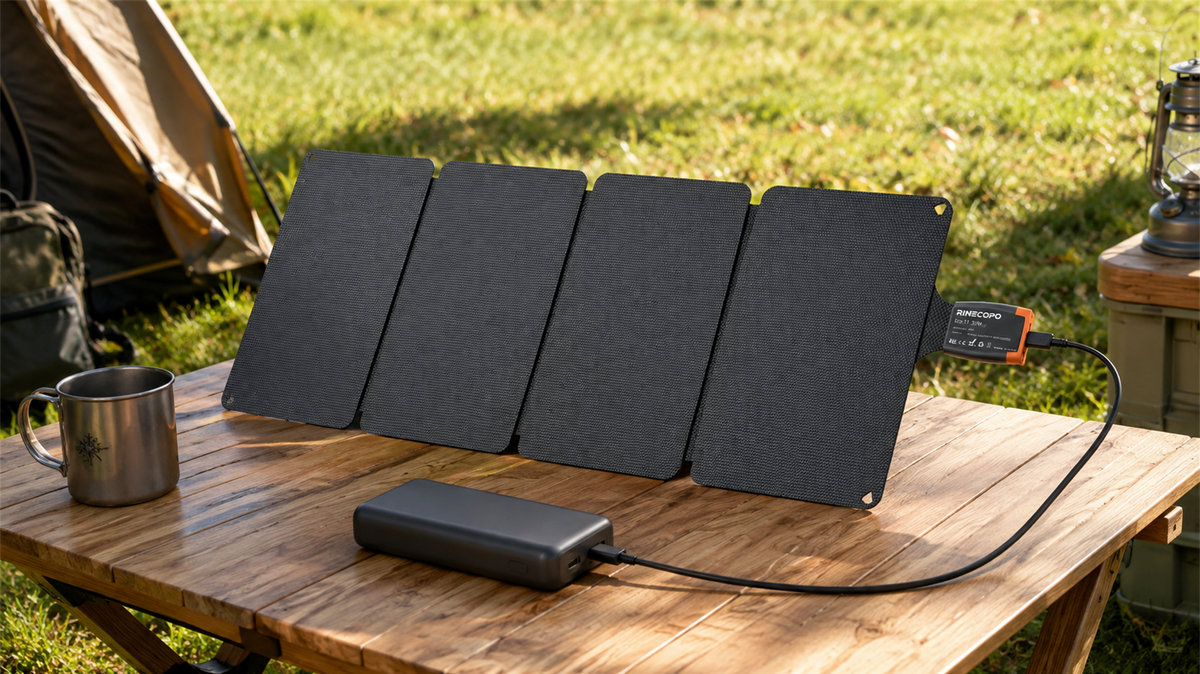
Can a 36W Solar Panel Charge a Power Bank? Compatibility, Cables and Time Estimates
Learn when a 36W solar panel can charge a power bank, how to verify USB-C compatibility, estimate time with watt-hours, and avoid unstable outdoor setups.
What Can a 192Wh Portable Power Station Run? A Practical Watt-Hour Planning Guide
Estimate how long a 192Wh portable power station may run different loads using a transparent watt-hour formula, realistic efficiency ranges, and practical solar planning guidance.