


During an outage, a charged phone can support emergency alerts, family check-ins, maps, and essential information. The difficult part is not simply owning a large battery—it is deciding what to power, how often to charge it, and how much reserve to protect.
This emergency phone charging plan shows how to organize a 25,000mAh power bank for a 72-hour go-bag. It uses transparent planning assumptions rather than guaranteed device runtimes, because phone batteries, signal conditions, temperature, cables, and user behavior all change real energy use.

Start with communication, not screen time
The purpose of an emergency charging kit is to keep essential communication available. Entertainment and normal all-day phone use can consume the same reserve needed later for an alert, a call, or directions.
The U.S. preparedness guidance at Ready.gov includes a cell phone with chargers and a backup battery among recommended emergency supplies. A power bank is one part of the plan; it does not replace a radio, flashlight, printed contacts, medicines, water, or local emergency instructions.
Before calculating energy, decide which tasks are essential:
- Receiving emergency alerts and weather information
- Short check-ins with family or an out-of-area contact
- Accessing saved maps, addresses, medical details, or evacuation information
- Using the phone briefly as a flashlight only if no dedicated light is available
- Preserving enough battery for an unexpected fourth day
Convert the label into a usable planning budget
Milliamp-hours are useful for identifying a product, but watt-hours are better for comparing stored energy across devices that operate at different voltages. The RINECOPO PB02 product information lists a 25,000mAh capacity and a 90Wh rating. That 90Wh figure is the starting energy budget—not a promise that 90Wh will arrive at a phone.
Energy is lost in voltage conversion, cable resistance, control electronics, standby operation, and the phone's own charging process. Instead of claiming a fixed number of charges, use a conservative planning factor and state it openly.
For an illustrative plan, assume that 75% of the labeled energy is available after conversion and reserve:
90Wh × 0.75 = 67.5Wh of planning energy
Spread across three days:
67.5Wh ÷ 3 = 22.5Wh per day
This is a planning example, not a measured PB02 result. Actual usable energy may be higher or lower. If you know the energy capacity of your phone battery in watt-hours, you can compare it with the daily budget. If you do not, use real practice sessions to refine the plan instead of relying on a marketing estimate.
A simple 72-hour charging schedule
Day 1: reduce demand before recharging
Begin by extending the phone's existing battery. Enable the device's low-power mode, reduce screen brightness, shorten screen timeout, and turn off nonessential background activity. In weak-signal areas, a phone may use more energy searching for service; use airplane mode when appropriate, then reconnect at planned check-in times.
Do not immediately recharge every device to 100%. Charge the primary phone enough for the next communication window, then disconnect it. Keep the power bank itself switched off or idle when it is not needed.
Day 2: protect the communication reserve
Review remaining phone battery, power bank status, and local conditions. If the outage may continue, narrow phone use to scheduled checks. A short text often uses less time and may work under network congestion when a long voice call does not, although delivery still depends on the network.
Use a dedicated flashlight and battery radio where possible. Charging a phone simply to use its flashlight or stream continuous news can drain the reserve faster than using purpose-built emergency items.
Day 3: keep a margin for uncertainty
Do not plan to reach zero at the end of 72 hours. Roads may be closed, utility restoration estimates may change, or a family member may need additional help. A useful plan keeps part of the original energy untouched until the third day.
At each check-in, record the power bank percentage and the phone percentage on paper. The goal is not a perfect test; the notes help you see whether your real use is consuming the reserve faster than expected.

Use a priority ladder for every device
A go-bag can quickly fill with rechargeable equipment. Give every item a tier before an outage:
- Tier 1—communication: primary phone and any medically necessary communication device.
- Tier 2—information and navigation: a rechargeable radio, GPS device, or backup phone when it serves a real emergency role.
- Tier 3—support equipment: headlamp, camera, or other device that is useful but can wait.
- Tier 4—optional use: entertainment devices and convenience accessories.
Only move down the ladder after the higher tier has enough energy for the next planned interval. If several people share one power bank, agree on the priority order in advance.
Why charging speed and battery capacity are different
The RINECOPO PB02 is listed with up to 170W total output and USB-C connections capable of high-power charging under supported conditions. That output rating describes how quickly compatible devices may receive power; it does not mean the battery stores 170Wh.
For an emergency phone plan, extremely high charging power is usually less important than compatibility, cable reliability, and disciplined energy use. A phone will request only a supported charging level. The power bank, cable, and phone must all negotiate a compatible USB charging profile.
Built-in USB-C cables can reduce the risk of forgetting a primary cable, but a small backup cable is still sensible. Inspect the built-in cables and connectors before storing the kit, and keep the ports free of dirt and metal objects.
Practice the plan before an outage
A home drill is more useful than an unverified claim about charge counts. Choose a normal weekend and test one part of the plan:
- Fully charge the power bank using the intended charger and a safe indoor outlet.
- Write down the starting percentage on both the phone and power bank.
- Use the phone in low-power mode with two or three planned check-in windows.
- Recharge only when the phone reaches your chosen threshold.
- Record the ending percentages after 24 hours.
- Use those observations to adjust the next two days while keeping an emergency margin.
A single practice day is not a certification or laboratory result. It is a way to tailor the plan to your own phone, network conditions, applications, and charging habits.
Storage and inspection checklist
- Recharge the power bank according to the manufacturer’s storage guidance.
- Inspect the case, display, ports, and cables for swelling, cracks, corrosion, or other damage.
- Do not store the battery in a hot vehicle, direct sun, standing water, or freezing conditions.
- Keep loose metal objects away from charging connectors.
- Pack a written emergency contact card in case the phone is unavailable.
- Review the kit on a recurring calendar reminder and after every use.
Stop using a lithium-ion battery that is swollen, damaged, leaking, producing odor or smoke, or becoming abnormally hot. Follow local disposal guidance and the manufacturer’s support instructions; do not place a damaged battery in ordinary household trash.
Frequently asked questions
How many times will a 25,000mAh power bank charge my phone?
There is no universal answer. The phone battery capacity, voltage conversion, cable, charging behavior, temperature, screen use, and network conditions all matter. Use watt-hours and a clearly stated loss allowance, then confirm the plan with your own device.
Should I charge my phone to 100% during an outage?
Not automatically. A partial charge may preserve more shared energy for later check-ins. The right threshold depends on the outage, phone, household needs, and access to another safe power source.
Can I charge several devices at once?
The PB02 supports multiple outputs, but simultaneous charging changes power distribution and can make the reserve harder to track. In an emergency, sequential charging by priority is often easier to manage.
Can a portable solar panel extend the plan?
A compatible solar panel may add energy when sunlight, alignment, temperature, and input requirements allow, but solar output is variable. Do not count untested solar recharging as guaranteed energy. Practice the full setup in advance and verify every connector and specification.
Is the PB02 currently available to purchase?
Availability can change. Review the current product page rather than relying on an article or cached search result.
Build the kit around decisions, not promises
A 72-hour charging plan works best when it combines a realistic energy budget, scheduled phone use, device priorities, written contacts, and regular inspection. The power bank provides flexibility; the plan determines how long that flexibility remains useful.
Review the RINECOPO PB02 specifications and current availability.
Recent Posts
Blog Tags

RINECOPO 25000mAh Laptop Power Bank 170W,Build-In cables
- 25,000mAh High Capacity
- Up to 170W Total Output
- Dual Built-in 100W USB-C Cables
- Three 100W USB-C Ports
- Charge Up to Five Devices
- Smart HD Digital Display
Best for laptop charging, long flights, business travel, school, remote work, and multi-device users.
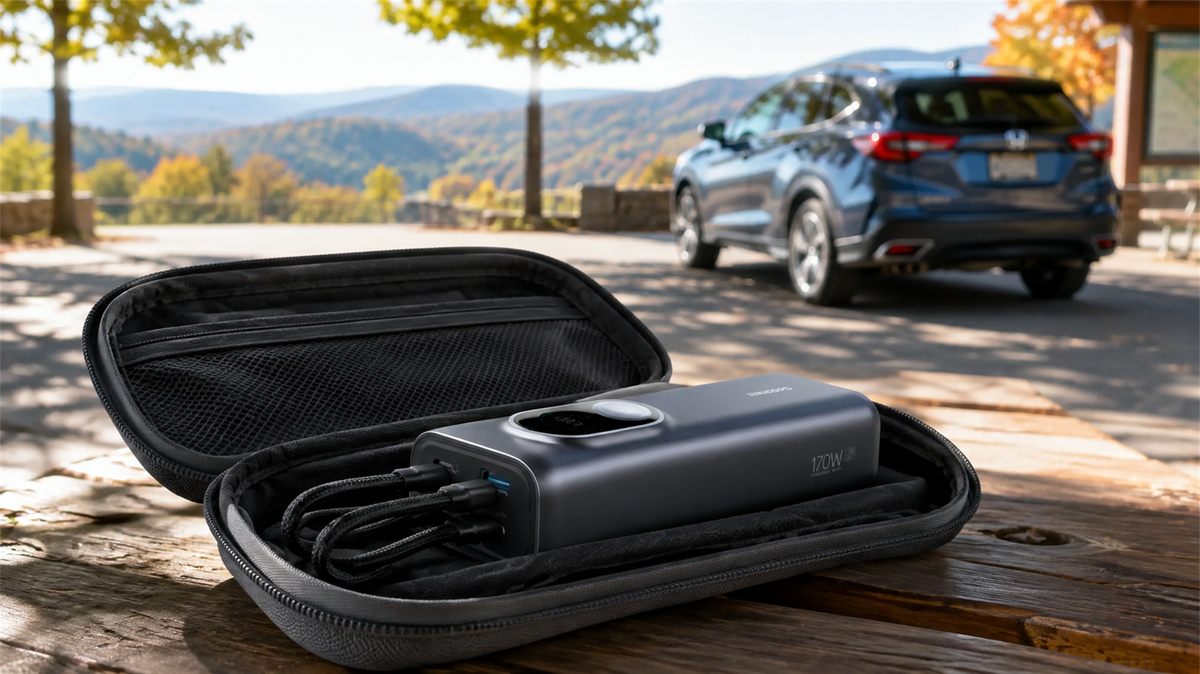
Can You Leave a Power Bank in a Car? Heat, Cold and Safe Storage
Learn why a parked car is a poor place to store a power bank and how to manage heat, cold, cables, inspections and safer road-trip storage.
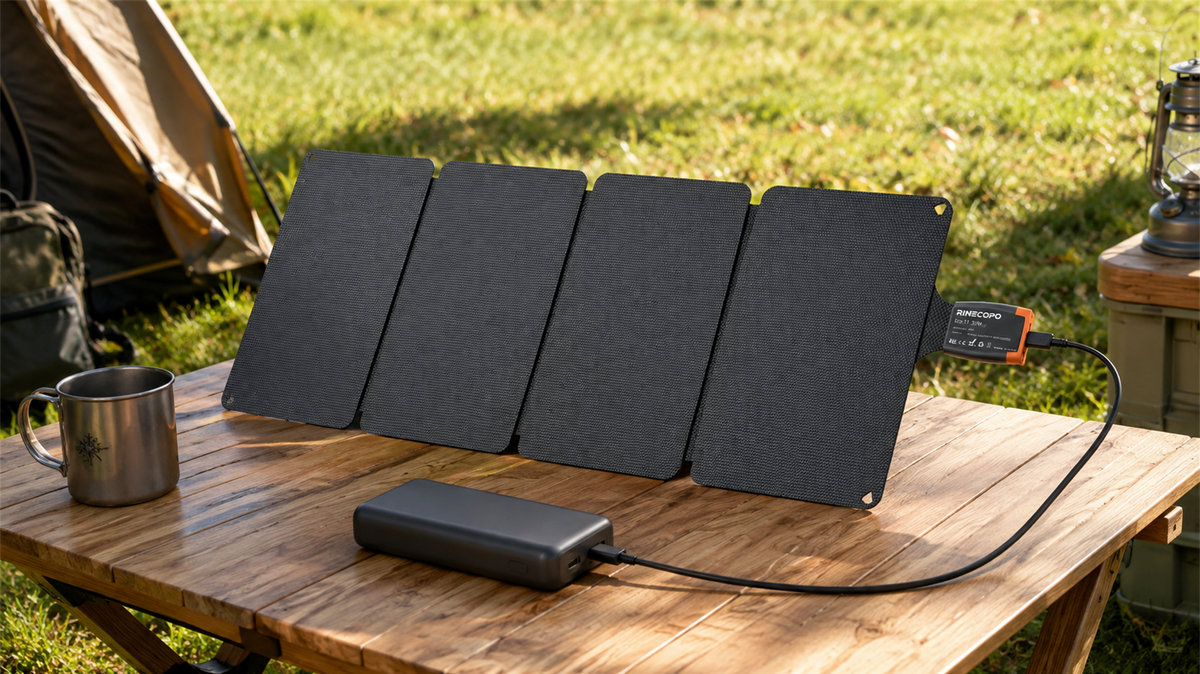
Can a 36W Solar Panel Charge a Power Bank? Compatibility, Cables and Time Estimates
Learn when a 36W solar panel can charge a power bank, how to verify USB-C compatibility, estimate time with watt-hours, and avoid unstable outdoor setups.
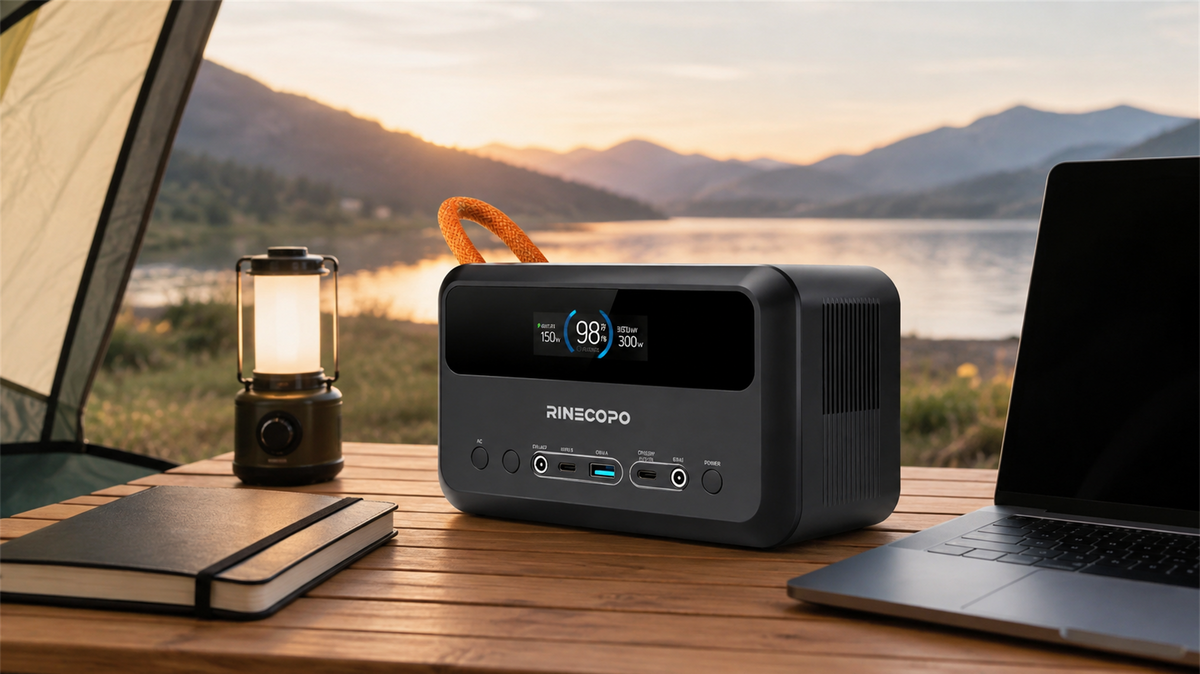
What Can a 192Wh Portable Power Station Run? A Practical Watt-Hour Planning Guide
Estimate how long a 192Wh portable power station may run different loads using a transparent watt-hour formula, realistic efficiency ranges, and practical solar planning guidance.